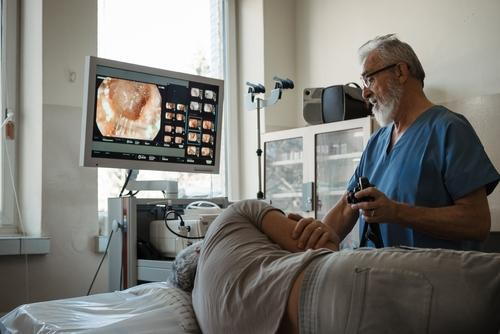
An upper endoscopy is a commonly performed procedure that allows a gastroenterologist to examine the upper portion of the digestive tract. It is used to evaluate symptoms affecting the esophagus, stomach, and beginning of the small intestine while helping diagnose a variety of gastrointestinal conditions. At Akron Digestive Health (ADH), serving patients in Akron, Massillon, and Fairlawn, OH, our gastroenterologists perform upper endoscopy procedures to support accurate diagnosis, early detection, and long-term digestive health.
Why Is an Upper Endoscopy Performed?
An upper endoscopy may be recommended to investigate symptoms such as persistent heartburn, difficulty swallowing, chronic abdominal pain, nausea, vomiting, unexplained weight loss, or gastrointestinal bleeding. The procedure also helps diagnose conditions including acid reflux, ulcers, inflammation, Barrett’s esophagus, celiac disease, and other disorders affecting the upper digestive tract.
Early evaluation allows many digestive conditions to be identified before they become more advanced.
Preparing for the Procedure
Before your upper endoscopy, your gastroenterologist will provide detailed preparation instructions. Patients are generally asked not to eat or drink for several hours before the procedure so the upper digestive tract can be examined clearly.
Your provider will also review your medications, medical history, and any allergies to determine whether temporary adjustments are needed before the procedure. Following these instructions carefully helps ensure a safe and successful examination.
What Happens During an Upper Endoscopy?
The procedure is performed in a comfortable outpatient setting. Patients receive medication to help them relax and remain comfortable throughout the examination.
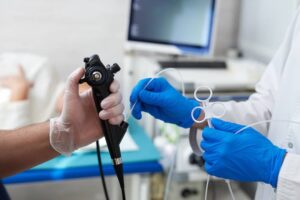
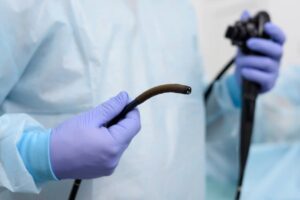
Your gastroenterologist gently inserts a thin, flexible tube with a small camera through the mouth and into the esophagus, stomach, and upper small intestine. The camera provides detailed images of the digestive tract, allowing your physician to identify inflammation, ulcers, abnormal tissue, bleeding, or other abnormalities. If necessary, small tissue samples, called biopsies, may be obtained during the procedure for further evaluation.
Most upper endoscopy procedures are completed in less than 30 minutes.
Recovery After an Upper Endoscopy
After the procedure, patients are monitored until the effects of the sedation begin to wear off. Because sedation is used, someone should be available to drive you home following your appointment.
You may experience mild throat soreness or temporary bloating for a short time after the procedure, but these symptoms usually resolve quickly. Your gastroenterologist will review the initial findings with you and discuss when biopsy results, if obtained, will be available.
The Benefits of Early Evaluation
Many digestive conditions develop gradually and may not cause obvious symptoms in their early stages. An upper endoscopy allows your gastroenterologist to identify abnormalities early, establish an accurate diagnosis, and recommend the most appropriate treatment plan.
Prompt evaluation can help relieve symptoms, prevent complications, and support better long-term digestive health.
Upper Endoscopy in Akron, OH
If you are experiencing persistent digestive symptoms, an upper endoscopy may help identify the cause and guide effective treatment. Akron Digestive Health (ADH), serving patients in Akron, Massillon, and Fairlawn, OH, provides comprehensive gastroenterology care focused on accurate diagnosis, personalized treatment, and long-term digestive wellness. To schedule an appointment or learn more about upper endoscopy, call (330) 869-0124 today.