Services & Procedures / Colonoscopy Screening and Lower GI
Colonoscopy Screening and Lower GI
Reduce your risk of colorectal cancer and other lower GI issues with colonoscopy screenings and more.
Lower GI Symptoms We Treat
We treat a variety of lower GI symptoms, including:
Unexpected weight loss
Persistent bowel changes
(e.g., diarrhea or constipation)
Abdominal pain
Blood in the stool or black stools
Lower GI Procedures We Offer
Colonoscopy
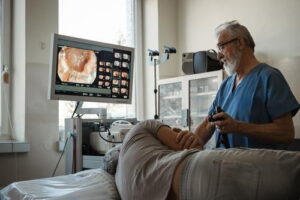
A colonoscopy is a procedure used to examine the lining of the large intestine for signs of cancer, adenomas (precancerous polyps), and other potential issues. Leveraging decades of experience and AI-assisted tools, we maintain an outstanding adenoma detection rate of 51.6%.
Our AI-assisted technology helps gastroenterologists identify subtle or hard-to-see polyps in real time, which can often be removed during the same colonoscopy.
Colonoscopies are recommended every 10 years for patients 45 or older – or sooner if you have unexplained lower GI symptoms like bleeding or diarrhea.
Flexible Sigmoidoscopy
A flexible sigmoidoscopy examines the last portion of the colon, called the sigmoid colon, for bleeding or growths. This procedure is less involved than a colonoscopy, so depending on your symptoms, your provider may recommend a sigmoidoscopy instead of a full colonoscopy.
Frequently
Asked
Questions
When should I schedule a colonoscopy at Akron Digestive Health?
The American Cancer Society recommends that most people get regular colonoscopy screenings every 10 years starting at age 45. If you have a family history of colorectal cancer or other risk factors, discuss with your provider to determine when and how often you should get colonoscopy screenings.
Can I get a colonoscopy without a referral?
Yes. You can schedule an appointment using our online scheduling tool or by calling us at (330) 869-0124.
What are the symptoms of colorectal cancer?
Colorectal cancer doesn't typically cause symptoms in the very early stages, making routine colonoscopy screenings absolutely crucial for adults approaching middle age (45 and older). A colonoscopy is the most effective procedure detecting cancer early on.
As colorectal cancer progresses, patients may experience symptoms like:
- Rectal bleeding
- Anemia
- Persistent fatigue
- Unexplained and sudden weight loss
- Bowel changes