Understanding Endoscopic Ultrasonography
You have been referred to have an endoscopic ultrasound, or EUS, a specialized procedure that combines endoscopy and ultrasound. EUS can (1) help identify the cause of your symptoms/conditions and/or (2) perform sampling and treatments for various disorders.
What is EUS?
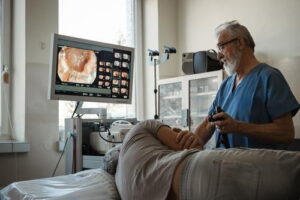
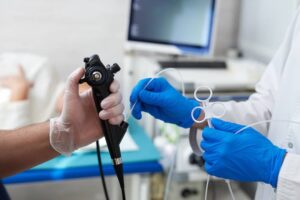
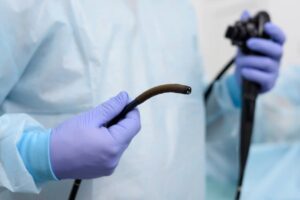
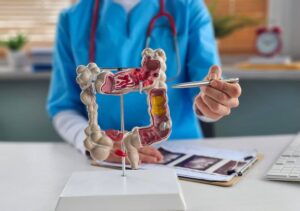
Endoscopic ultrasound (EUS) is a specialized procedure for ultrasound examination of the upper and lower gastrointestinal tract and surrounding organs. The upper tract consists of the esophagus, stomach and duodenum (the first part of the small intestine). The lower tract includes your colon (large intestine) and rectum. EUS is also used to study other organs near the gastrointestinal tract, including the liver, bile ducts, gallbladder and pancreas. Physicians who perform EUS are highly trained specialists in gastroenterology. To perform EUS, your doctor will use a thin, flexible tube called an endoscope that has a built-in miniature ultrasound instrument at its tip. The endoscope will be passed through your mouth or anus to the area that is to be examined, and ultrasound images will be taken.
Why is EUS done?
- EUS is used to diagnose conditions that may cause symptoms such as abdominal pain or weight loss.
- EUS is also useful to evaluate known abnormalities, such as lumps which were detected at a prior endoscopy or imaging studies, such as computed tomography (CT) scan or magnetic resonance imaging (MRI).
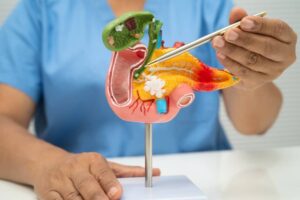
- EUS can also be used to evaluate diseases of the pancreas, bile duct and gallbladder.
- During EUS, doctors can take tissue samples with a thin needle to obtain a diagnosis. This method can also help in treatments such as draining blocked bile and pancreatic ducts, cysts and gallbladder, particularly when surgery is not safe.
- Information from this test helps your doctor make treatment decisions for your care.
Why is EUS used for patients with cancer?
EUS helps your doctor determine the presence and extent of certain cancers of the digestive tract and surrounding organs to nearby lymph glands or vital structures, such as major blood vessels. EUS can be used to obtain a biopsy in a minimally invasive fashion (fine needle aspiration or biopsy) of an abnormal area to determine the proper treatment.
How should I prepare for EUS?
Medications
Let your doctor know about any medical conditions you have, such as heart or lung disease. Also, be sure to mention any allergies you have to medications or latex.
Most medications may be continued as usual, but some could interfere with the preparation or the examination.
Inform your doctor about any medications you are taking, particularly:
- Blood thinners such as apixaban, rivaroxaban, warfarin or heparin and other drugs that interfere with clotting such as clopidogrel.
- Other medications such as insulin, weight loss medications, aspirinproducts and arthritis medications should be discussed with your doctor before the procedure.
- Eating and drinking: You must have an empty stomach for your safety during the procedure. Do not eat or drink anything (including water) for 8 hours before your EUS. Your doctor will give you the exact time to stop eating and drinking based on your appointment time. Arrange for a responsible adult to drive you home after the procedure due to sedation effects.
For EUS of the rectum or colon, your doctor will instruct you to either consume a solution to cleanse your colon or to follow a clear liquid diet combined with laxatives or enemas prior to the examination.
It is important to follow your doctor’s instructions carefully to ensure a safe and successful procedure.
What can I expect during EUS?
For an EUS examination of the upper gastrointestinal tract, you will receive medication to help you relax, make you sleepy and to minimize discomfort. Your doctor might ask an anesthesia specialist to administer sedation or general anesthesia. You will begin by lying on your left side. After you fall asleep, your doctor will pass a long flexible tube (an endoscope) through your mouth, gently glide it into the esophagus and stomach into the duodenum (the first part of the small intestine).
The instrument does not interfere with your ability to breathe. The examination typically takes about 30–60 minutes depending on the complexity of your case and may require you to be fully asleep during the procedure. This time also depends on whether tissue samples are needed.
What can I expect after EUS?
Recovery: You will be monitored in the recovery area (for up to an hour) and sent home after the procedure when most of the effects of the medications have worn off. It is common to experience bloating or pass gas because of the air introduced during the examination. After an EUS examination of the upper gastrointestinal tract, you might have a slight sore throat for up to three days. You can usually resume your usual diet unless you are instructed otherwise.
Transportation: An adult must accompany you home from the procedure because of the medications used during the examination. You should not drive, operate machinery or make legal decisions the day of the procedure to make sure that the effects of the medication have worn off. Even if you feel alert after the procedure, the medications can affect your judgment and reflexes for the rest of the day.
Medications: Your doctor might give you antibiotics during the procedure and prescribe antibiotics after the procedure if you are having specialized EUS procedures, such as to drain a fluid collection or a cyst.
Results: Your doctor generally can inform you of the preliminary results of the procedure that day, but the results of some tests, including biopsies, may take several days.
What are the possible complications of EUS?
EUS with or without a needle biopsy is a routine outpatient procedure and does not require hospitalization. Although uncommon, complications can occur. Perforation (a hole or tear in the gastrointestinal tract lining) is very rare but may occur and can sometimes require surgery. Some patients might have a change in heart rate, blood pressure or breathing from the medications. Rare complications from a needle biopsy include bleeding, infection or pancreatitis (inflammation of the pancreas).
Although complications after EUS are uncommon, it is important to recognize early signs of possible complications. Contact your doctor immediately if you have a fever after the procedure or if you notice trouble swallowing or increasing throat, chest or abdominal pain, or bleeding, including black/bloody stools. If you have any concerns about a possible complication, it is always best to contact your doctor right away. If you cannot reach the doctor’s office and have concerning symptoms, go to the nearest emergency room and tell them you had an EUS procedure.
FYI: This brochure answers frequently asked questions about the EUS procedure. If you have additional questions, discuss them with your primary care doctor, your gastrointestinal endoscopist or your endoscopy nurse. If you have any questions about your need for EUS, alternative approaches to your problem, the cost of the procedure, methods of billing or insurance coverage, do not hesitate to speak to your doctor or doctor’s office staff about it.